What is a Fractional CIO Engagement Model? The 2026 Executive Guide
- jonesaqayalo
- Jun 17
- 12 min read
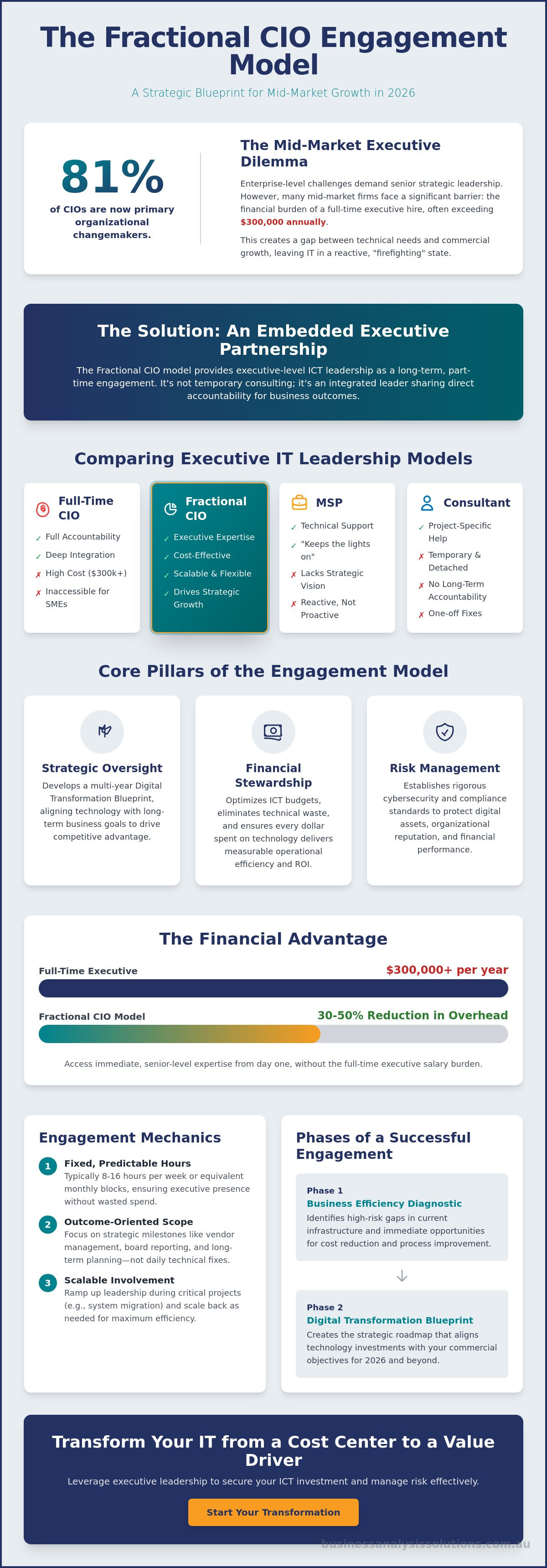
81% of CIOs now confirm their role has transitioned from technical management to acting as a primary organizational changemaker. For many mid-market firms, however, the financial burden of a full-time executive hire remains a significant barrier to achieving this level of strategic oversight. You may be asking yourself, what is a fractional CIO engagement model and how does it solve the disconnect between technical requirements and commercial growth? This model is not a temporary consulting fix. It's a structured executive partnership designed to move your technology strategy from a reactive state to a proactive driver of efficiency.
We recognize that managing complex digital transformation projects alone often leads to wasted IT spend and misaligned infrastructure. This guide provides a clear roadmap for leveraging high-level leadership to secure your ICT investment and manage risk effectively. We will examine the specific day-to-day operations of this model, the methodical approach to process mapping, and the exact steps required to establish a digital transformation blueprint that delivers tangible results for your organization throughout 2026.
Key Takeaways
Understand what is a fractional CIO engagement model and how it functions as an embedded executive partnership rather than a traditional, detached consulting service.
Learn how fixed weekly or monthly hour blocks provide the flexibility to scale high-level IT leadership in direct alignment with your project intensity and budget.
Discover the methodology for bridging the gap between technical infrastructure and commercial objectives to ensure every ICT investment drives measurable operational efficiency.
Identify how a fractional leader integrates into your existing organizational structure to provide direct mentorship for IT managers and strategic reporting to the board.
Evaluate the financial advantages of a model that typically reduces executive overhead by 30-50% while delivering immediate, senior-level expertise from day one.
Table of Contents
Defining the Fractional CIO Engagement Model in 2026
A fractional CIO engagement model is a long term, part time professional partnership that provides executive ICT leadership to organizations requiring senior expertise without the burden of a full time salary. This model has evolved significantly. While a traditional Fractional chief information officer might have once been viewed as a high level consultant, the 2026 standard is much more integrated. Understanding what is a fractional CIO engagement model requires looking at the depth of the relationship; the executive is embedded within your leadership team and shares direct accountability for business outcomes. They don't just suggest a path; they own the results of the strategy they implement.
A fractional CIO engagement model serves as a strategic bridge between technology and business growth. This partnership prioritizes high level strategic alignment over day to day technical troubleshooting or helpdesk management. By focusing on the broader organizational coordination, the fractional executive ensures that every technical decision supports a specific commercial objective. It's a methodical approach to problem solving that transforms IT from a cost center into a value driver.
The Shift from Reactive IT to Proactive Leadership
The 2026 business landscape moves too fast for one off projects. Organizations now require continuous digital strategy to remain competitive. Many firms rely on a Managed Service Provider (MSP) for technical support, but an MSP focuses on keeping the lights on. In contrast, a fractional CIO focuses on where those lights are headed. This model addresses the "Executive Dilemma" where mid market firms face enterprise level challenges but lack the resources for a $300,000 plus annual executive hire. It provides the senior vision needed to move beyond reactive "firefighting" and toward a proactive, stable future.
Core Pillars of the Engagement Model
The success of this model rests on three distinct pillars of professional competence. First is strategic oversight. The executive develops a comprehensive Digital Transformation Blueprint that outlines a multi year path for growth. Second is financial stewardship. They work to optimize ICT budgets and eliminate technical waste, ensuring that funds are directed toward high impact ICT Solutions. Finally, they provide executive level risk management. This involves establishing rigorous cybersecurity and compliance standards that protect the organization's reputation and financial performance. It's a structured system designed to create harmony between your technical assets and your long term business goals.
The Mechanics of Engagement: Hours, Scope, and Scalability
The operational structure of a fractional CIO is built on predictability and precision. Most engagements follow a fixed cadence, typically ranging from 8 to 16 hours per week or equivalent monthly blocks. This isn't a random allocation of time. It's a calculated commitment designed to provide the necessary executive presence for board meetings and strategic planning while maintaining high levels of financial efficiency. Because the role is results-oriented, the focus remains on high-level milestones rather than clocking hours for administrative tasks.
When considering what is a fractional CIO engagement model in terms of daily utility, it's defined by strategic outcomes. Unlike technical staff or temporary contractors, the fractional CIO's scope focuses on vendor management, organizational coordination, and long-term ICT Solutions. They manage the "why" and "how" of technology, leaving the "what" of daily repairs to your existing support teams. This scalability is a core advantage. It allows your organization to ramp up executive involvement during a major system migration and reduce it once the project reaches a steady state of performance.
Phases of a Successful Engagement
Success begins with a structured onboarding process that moves from discovery to execution. It starts with a Business Efficiency Diagnostic. This phase is critical because it identifies high-risk gaps in your current infrastructure and immediate opportunities for cost reduction. Following this, the executive creates a Digital Transformation Blueprint. This document serves as the tactical roadmap for all future technology investments, ensuring every dollar spent aligns with a commercial goal. Finally, the engagement moves into a governance phase, where the CIO provides ongoing implementation oversight and optimization.
Retainers and Service Level Agreements (SLAs)
A retainer-based model ensures your organization has priority access to senior expertise without the delay of project-based procurement. These agreements are governed by Strategic SLAs. Unlike technical SLAs that track server response times, these focus on project delivery milestones, budget adherence, and system harmony. Clear termination and transition clauses are also standard. They ensure that if the business eventually requires a full-time hire, the fractional executive facilitates a smooth handover of all strategic assets. If you're ready to evaluate your current setup, our Fractional CIO Services provide the methodical leadership required for modern growth.
Strategic Alignment: Bridging ICT with Business Objectives
The true value of what is a fractional CIO engagement model lies in its ability to force a direct connection between technical spend and commercial output. In many organizations, IT operates as a silo, making decisions based on technical preference rather than operational necessity. A fractional CIO breaks this cycle by ensuring every investment in business technology serves a pre-defined business objective. They act as a critical translator, converting complex technical requirements into the language of financial performance and system harmony for the board. By providing this executive level filter, the fractional CIO model prevents "shiny object syndrome" by vetting new tech procurement against actual organizational needs rather than industry hype.
This alignment creates a sense of momentum and professional competence. When technology is viewed as a tool for agency and progress, the entire leadership team gains confidence in the digital strategy. The fractional executive doesn't just manage systems; they manage the relationship between those systems and the company's broader mission. This ensures that IT is never a bottleneck but remains a strategic asset that facilitates growth and operational efficiency.
Developing the Strategic Technology Roadmap
A roadmap isn't just a list of future purchases. It's a methodical prioritization of ICT projects based on their projected ROI and the organization's current readiness for change. As we move through 2026, this roadmap must account for high impact trends like AI integration and automation implementation. The fractional executive evaluates these tools through a lens of pragmatism, ensuring that adoption leads to efficiency rather than increased complexity. They build for scalability, ensuring that today's solutions don't become tomorrow's technical debt. This structured approach ensures that the digital strategy remains agile enough to pivot with market changes while remaining firmly grounded in logic.
Vendor Management and ICT Procurement
Objective oversight is often missing in smaller organizations where internal staff may have established biases or limited negotiation experience. A fractional CIO provides an authoritative, third party perspective on technology vendors. They negotiate contracts from a position of both technical depth and commercial authority, often identifying savings that internal teams might overlook. This includes a rigorous audit of existing software subscriptions to eliminate redundancy and the optimization of cloud spend to prevent budget leakage. By managing these relationships with professional distance, the executive ensures that the organization receives maximum value from every external partnership. This meticulous focus on financial stewardship reinforces the core promise of the engagement model: delivering high level results through disciplined management.
Operational Integration: Working With Your Existing Team
The fractional CIO typically maintains a direct reporting line to the CEO or Board of Directors, ensuring that technical decisions carry the necessary executive authority. This positioning is a fundamental component of what is a fractional CIO engagement model, as it allows the individual to influence high level business strategy without the friction of middle management layers. Instead of replacing existing staff, they provide mentorship and high level direction to internal IT managers. This relationship empowers your current team to execute on complex tasks while receiving the strategic guidance they previously lacked. It creates a collaborative environment where technical staff feel supported rather than scrutinized by leadership.
Effective integration also extends to external project management teams. The fractional CIO provides the technical oversight required to ensure these vendors remain accountable to the organization's broader goals. To maintain momentum, the engagement establishes clear communication rhythms. These include weekly tactical syncs, monthly performance reviews, and quarterly strategy sessions. This structured approach ensures that every stakeholder remains aligned with the digital transformation blueprint. When asking what is a fractional CIO engagement model in a practical sense, it's this rhythmic coordination that defines its success. It transforms sporadic IT requests into a predictable cycle of progress and resolution.
The Fractional CIO as a Culture Catalyst
Technical change often meets internal resistance, particularly when staff feel overwhelmed by new systems. A fractional leader overcomes this by acting as a culture catalyst, fostering a data driven mindset across departments like Sales, HR, and Finance. By bridging the gap between technical requirements and commercial objectives, they eliminate the silos that traditionally hinder operational efficiency. This professional leadership ensures that digital change is seen as an opportunity for progress rather than a disruption to established workflows. They focus on finding the most effective solution for the users, not just the easiest one for the IT department.
Governance and Reporting Frameworks
Precision in reporting is essential for organizational stability and financial performance. The fractional executive implements executive dashboards to track ICT health and project progress in real time. Monthly reporting focuses on budget variance, security posture, and roadmap milestones, providing the board with a transparent view of technical performance. These frameworks ensure business continuity through documented processes and comprehensive knowledge transfer. If your organization lacks this level of professional oversight, exploring our Fractional CIO Services is the logical next step toward system harmony. This structured approach suggests that complex organizational challenges can indeed be resolved through a methodical strategy.
Evaluating ROI: Comparing Executive IT Leadership Models
Analyzing the return on investment for executive leadership requires looking beyond the base salary. When evaluating what is a fractional CIO engagement model, the financial logic centers on the Total Cost of Ownership (TCO). A full-time CIO in 2026 commands a significant package, including superannuation, performance bonuses, and executive benefits. By contrast, a fractional model often costs 30-50% less because it eliminates these overheads and associated recruitment fees. This approach allows mid-market firms to access 20+ years of senior experience from day one without the long-term liability of a permanent employment contract.
Recruitment risk is another critical factor that leadership teams often overlook. Hiring the wrong full-time executive can set a company back years and cost hundreds of thousands in headhunter fees and severance. The fractional model provides a lower-risk entry point. It allows the board to stabilize the organization's technical direction and establish clear governance before committing to a permanent hire. This methodical transition ensures that when a full-time role is eventually required, the infrastructure is already optimized for their success.
Cost-Benefit Analysis: Fractional vs. Full-Time
The primary difference lies in the shift from a variable, high-stakes employment contract to a fixed professional fee. This predictability aids in long-term financial planning and ensures that IT costs remain aligned with actual usage. Additionally, fractional CIOs offer the value of "cross-pollination." Because they work across multiple industries, they bring diverse insights into automation and process management that a single-company executive might lack. It's a pragmatic way to gain enterprise-level intelligence. The transition from a fractional model to a full-time hire should only occur once the organization reaches a scale where the daily executive workload consistently exceeds the capacity of the fractional block.
The Tangible and Intangible Returns
The success of this model is measured by business efficiency. Tangible returns include a marked reduction in redundant IT spend, faster delivery of critical transformation projects, and a lower overall security risk. By identifying technical waste and optimizing cloud infrastructure, the fractional CIO often pays for their own engagement through direct savings.
Intangible returns are equally vital for organizational harmony. For a CEO, the primary benefit is peace of mind. Knowing that a seasoned expert is managing the digital roadmap allows the rest of the leadership team to focus on core commercial growth. This strategic clarity builds executive confidence in technology, moving it from a source of anxiety to a pillar of stability. Ready to stabilize and grow your organization? Explore our Fractional CIO services to see how a methodical approach delivers end-to-end results.
Securing Your Strategic Technical Future
The transition toward a fractional executive structure represents a shift from reactive troubleshooting to methodical, strategic leadership. By now, the answer to what is a fractional CIO engagement model should be clear: it's a structured partnership that prioritizes long term organizational coordination over short term technical fixes. This model secures your ICT investment by ensuring every technical decision is rooted in commercial logic and financial performance. It provides the senior oversight necessary to manage complex vendor relationships and internal team development without the overhead of a full time hire.
Achieving system harmony requires a partner who understands the intersection of technical requirements and broader business objectives. With over 20 years of industry experience and national Australian service coverage, we specialize in delivering comprehensive Digital Transformation Blueprints that drive measurable efficiency. We invite you to Book a Strategic Fractional CIO Consultation to begin the process of stabilizing and optimizing your technical landscape. Taking this step ensures your organization remains agile, secure, and prepared for the challenges of 2026 and beyond.
Frequently Asked Questions
What is the difference between an IT consultant and a fractional CIO?
An IT consultant generally provides advice on a specific project or problem, whereas a fractional CIO serves as an embedded member of your leadership team. While a consultant delivers a report and departs, the fractional executive takes accountability for the long term digital strategy and its impact on your financial performance. They bridge the gap between technical teams and board level objectives to ensure continuous system harmony.
How many hours a month does a fractional CIO typically work?
A standard engagement usually involves between 32 and 64 hours per month, often structured as 8 to 16 hours per week. This allocation provides sufficient time for C suite meetings, vendor management, and strategic oversight without the cost of a full time hire. The specific cadence is determined during the initial diagnostic phase to align with your organization's operational requirements.
Can a fractional CIO manage our existing Managed Service Provider (MSP)?
Yes, a fractional CIO provides the necessary oversight to ensure your Managed Service Provider (MSP) remains accountable to your commercial goals. They evaluate MSP performance against strategic SLAs, manage contract renewals, and ensure technical support aligns with the broader digital transformation blueprint. This removes the burden of technical management from the CEO while improving service quality.
Is a fractional CIO engagement suitable for small businesses under $5M revenue?
Businesses under $5M revenue often find this model ideal when they face complex technical challenges or rapid scaling requirements. Even at this size, a lack of senior ICT leadership can lead to expensive technical debt and operational silos. The fractional model offers access to enterprise level expertise at a price point that respects the financial constraints of a smaller organization.
How does a fractional CIO handle cybersecurity and data privacy?
They approach cybersecurity through the lens of executive risk management rather than just technical implementation. This involves establishing robust data privacy frameworks, ensuring compliance with industry standards, and overseeing the implementation of security protocols by your technical teams. Their goal is to protect the organization's reputation and financial stability through proactive planning and rigorous governance.
What happens if we need more hours during a major digital transformation project?
Scalability is a core feature of the fractional model, allowing for an increase in hours during periods of high project intensity. If you're undergoing a significant system migration, the executive can ramp up their involvement to provide deeper project management and oversight. Once the transformation reaches a stable state, the engagement typically returns to its standard baseline hours to maintain financial efficiency.
Will a fractional CIO help with software selection and implementation?
A fractional CIO provides objective, third party oversight during the software selection process to prevent biased or impulsive technical decisions. They vet vendors based on long term ROI, organizational readiness, and technical compatibility with your existing systems. During implementation, they provide the high level direction needed to ensure the project stays on schedule and delivers the intended operational efficiency.
How do you measure the success of a fractional CIO engagement?
Success is measured through concrete metrics like reduced IT waste, improved project delivery timelines, and closer alignment between technical spend and business growth. When evaluating what is a fractional CIO engagement model for your firm, you should look for improvements in executive confidence and strategic clarity. A successful partnership results in a stable, predictable technical environment that facilitates rather than hinders your commercial progress.



Comments