How to Choose an ICT Project Management Consultant: A Strategic Selection Framework
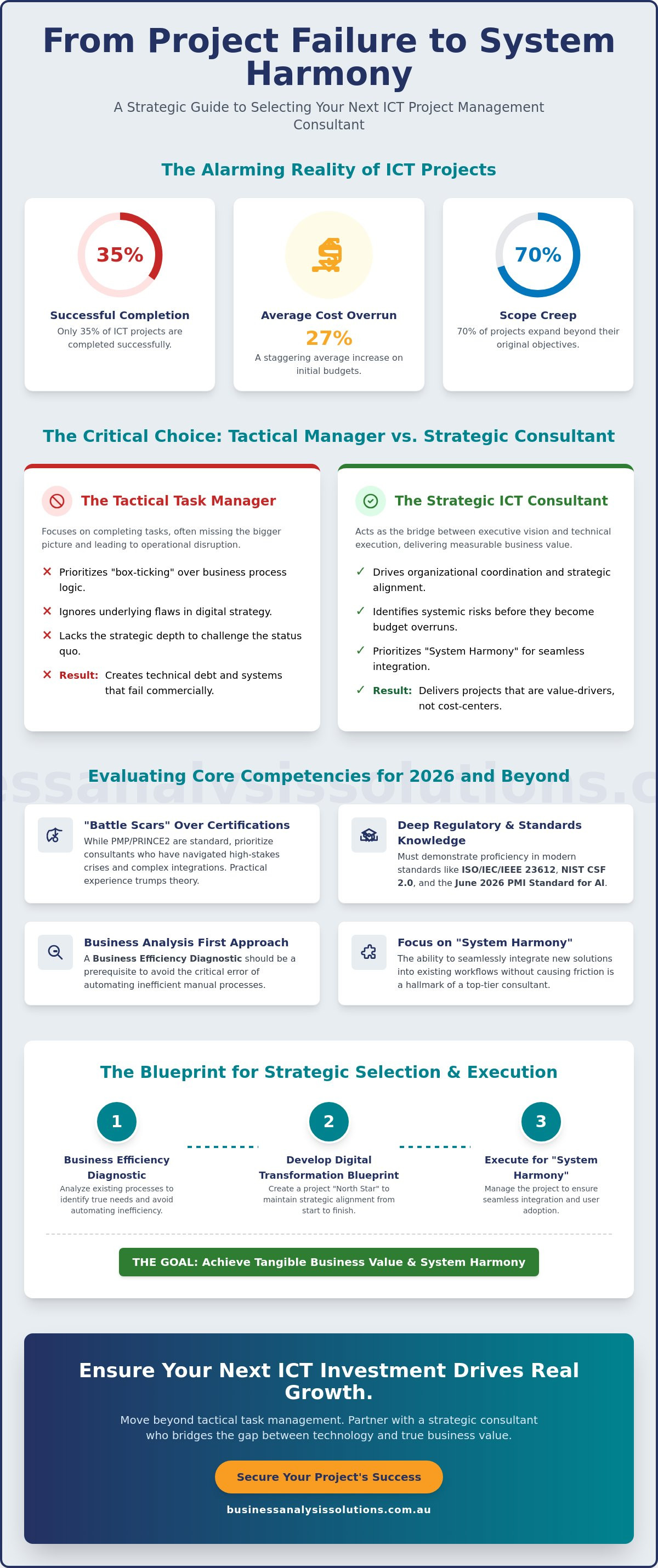
Only 35% of ICT projects are completed successfully, while the average cost overrun remains a staggering 27%. These figures reflect a systemic failure in how organizations bridge the gap between technical requirements and executive vision. You likely understand the frustration of engaging an advisor who provides generic high-level advice but lacks the implementation depth to manage scope creep or complex technical risks. Learning how to choose an ICT project management consultant is no longer just about checking credentials; it's about finding a partner who prioritizes strategic alignment over technical jargon.
This article provides a methodical framework to master the selection process and identify consultants who deliver tangible business value. We'll move beyond basic resumes to examine how to vet for proficiency in 2026 standards, such as ISO/IEC/IEEE 23612 for incident management and the latest PMI standards for AI integration. You'll learn to evaluate a candidate's ability to drive operational efficiency and resolve the misalignment between technical solutions and your core business objectives. We'll outline a structured approach to ensure your next ICT investment results in system harmony rather than another statistic of failure.
Key Takeaways
Distinguish between tactical task management and strategic ICT leadership to ensure your projects achieve broader organizational coordination.
Master how to choose an ICT project management consultant by evaluating their practical experience in navigating regulatory compliance and technical risk.
Recognize why a Business Efficiency Diagnostic is a prerequisite for any ICT initiative to avoid the risk of automating inefficient manual processes.
Identify selection red flags like a lack of transparency in reporting or an inability to challenge the status quo during the planning phase.
Utilize a Digital Transformation Blueprint as a project North Star to maintain strategic alignment from the initial selection through to final execution.
Table of Contents
Defining the Role: ICT Project Management vs. Strategic Consulting
The distinction between tactical execution and strategic leadership defines the success or failure of modern digital initiatives. Many organizations mistakenly prioritize software proficiency over Information Technology Management; this leads to systems that function technically but fail commercially. In 2026, the benchmark for excellence has shifted. Project managers aren't judged solely on their ability to meet a deadline; they're evaluated on their capacity to deliver measurable business value through organizational coordination. This transition requires a consultant who views technology as a tool for resolution rather than an end in itself.
Understanding this evolution is central to determining how to choose an ICT project management consultant who can drive genuine change. The role now demands adherence to the June 2026 PMI Standard for Artificial Intelligence in Portfolio, Program, and Project Management, ensuring that technical deployments align with high-level governance. By integrating Fractional CIO services Australia, businesses can elevate project outcomes from simple installations to strategic transformations that stabilize financial performance and operational efficiency.
The Problem with Generic Project Management
A common pitfall in ICT procurement is the "box-ticking" mentality. This approach prioritizes the completion of tasks over the logic of the business process. When a consultant focuses exclusively on tactical milestones, they often ignore underlying flaws in the digital strategy, which inevitably creates technical debt. Technical proficiency cannot save a project if the business logic is fractured. Hiring a specialist who lacks a broad perspective on process management often results in a solution that is technically sound but operationally disruptive. Statistics from 2026 indicate that 70% of projects experience scope creep, often because the initial planning phase lacked the strategic depth to challenge the status quo.
The Value of Strategic Oversight
Strategic consultants act as the vital bridge between boardroom vision and technical execution. They don't just manage a schedule; they identify systemic risks before they manifest as budget overruns. When you evaluate how to choose an ICT project management consultant, prioritize those who emphasize "System Harmony." This concept involves the seamless integration of new ICT solutions into existing workflows without causing friction. Strategic oversight ensures compliance with the latest standards, such as ISO/IEC/IEEE 23612:2026 for incident management. This level of meticulous planning ensures that the project remains a value-driver rather than a cost-center, fostering a predictable environment for growth and innovation.
Core Competencies: Evaluating Experience, Methodology, and Battle Scars
Certifications like PMP or PRINCE2 are table stakes in 2026. While these credentials demonstrate a grasp of the professional lexicon, they don't guarantee the ability to navigate a high-stakes crisis or a complex system integration. When determining how to choose an ICT project management consultant, prioritize "battle scars" over certificates. A consultant who has steered a project through significant scope creep or a major regulatory shift possesses a pragmatic understanding that theory cannot provide. These seasoned experts identify the Keys to Successful IT Project Management within your specific organizational constraints, ensuring that technical debt is managed before it compounds.
Industry-specific experience is equally critical for navigating the current regulatory landscape. Adhering to the NIST Cybersecurity Framework (CSF) 2.0 or the June 2026 PMI standards for AI requires more than general IT knowledge. It requires a history of successful audits and compliance adherence. This level of expertise ensures that your project doesn't just launch; it remains resilient against evolving legal requirements and cybersecurity threats. A consultant with deep industry roots understands the nuances of organizational coordination and can anticipate the friction points unique to your sector.
Methodological Rigour vs. Flexibility
Australian businesses often operate in complex environments where a rigid Waterfall approach, which historically has a 49% success rate, is insufficient. Conversely, pure Agile might lack the structure required for enterprise-level financial reporting despite its 64% success rate. The most capable consultants utilize expert project management to tailor a hybrid methodology. This flexibility allows the project to maintain momentum while respecting your organizational culture. They adapt their framework to your internal pace, ensuring that the methodical execution remains logical and predictable.
Communication and Stakeholder Management
Effective ICT leadership is 90% communication. A consultant must possess "Executive Presence," the ability to translate technical complexities into financial outcomes for the CEO while maintaining technical credibility with the engineering team. They must be comfortable resolving the high-stakes conflicts that inevitably arise during digital transformation. If you're looking for a partner who can bridge these gaps, our Business Analysis services provide the clarity needed to align diverse stakeholders around a single, objective version of the truth. This alignment is what ultimately prevents the misalignment between technical solutions and business objectives.
The Business Analysis Factor: Why Technical Skills Are Not Enough
Technical proficiency is a commodity in the modern market, but it's rarely the primary driver of project success. When you evaluate how to choose an ICT project management consultant, the deciding factor should be their analytical depth. High-performing ICT initiatives depend on a consultant’s ability to conduct a comprehensive Business Efficiency Diagnostic before any technical deployment begins. Without this baseline, organizations face the costly risk of automating a broken manual process. A consultant who prioritizes Strategic Business Analysis ensures that the project scope is rooted in operational reality rather than technical aspiration. This methodical approach identifies the precise levers that drive financial performance and system harmony.
The core challenge lies in the translation of complex business needs into functional technical requirements. This is where the implementation gap often originates. If a consultant lacks the skills to bridge this divide, the technical solution will inevitably drift away from the business objectives. A consultant with deep business analysis expertise acts as a specialized filter. They refine raw organizational needs into a structured technical roadmap that vendors can execute with precision. This ensures that every ICT solution serves a specific, documented business purpose rather than just adding another layer of digital complexity.
Process Mapping as a Project Foundation
Effective project management requires a clear visualization of the "As-Is" state before defining the "To-Be" solution. Process mapping serves as the foundation for this transition, allowing stakeholders to identify hidden bottlenecks that technical solutions alone cannot fix. By documenting current workflows, consultants prevent scope creep and ensure that the new system integrates seamlessly with existing organizational coordination. Industry professionals report that rigorous process mapping reduces project risk by approximately 40% by exposing systemic flaws during the planning phase rather than during implementation.
Requirements Integrity
Projects often fail at the documentation stage due to poor requirements integrity. Ambiguity in the initial brief leads to vendor misalignment and expensive software rework. A skilled consultant ensures that technology serves the process, not vice versa. They eliminate ambiguity by creating meticulous documentation that leaves no room for interpretation by developers or vendors. This level of precision is essential for successful vendor selection and software implementation. It creates a predictable environment where the final delivery matches the executive vision, ensuring the project remains a strategic asset rather than a technical burden.
Red Flags: Avoiding the Implementation Gap During Selection
Identifying potential failure points during the interview or RFP phase is as critical as the final implementation itself. When considering how to choose an ICT project management consultant, the most dangerous candidate is often the "Yes-Man." This individual avoids challenging the status quo and agrees with every executive suggestion without assessing technical feasibility or operational impact. A strategic partner provides the professional friction necessary to prevent costly mistakes. They prioritize the long-term health of your business technology environment over short-term social ease.
Another significant warning sign is "Black Box" consulting. This occurs when a consultant operates with a lack of transparency in their reporting and metrics. If they can't clearly define how they measure progress or if their methodology remains opaque, you risk an implementation gap where the final product fails to meet expectations. Avoid any professional who offers a "One-Size-Fits-All" solution. Every organization possesses unique legacy systems and cultural nuances; a generic approach ignores these complexities and often leads to system disharmony. If you recognize these patterns during selection, it's time to pivot toward a more methodical provider.
The Disappearing Act
A common industry frustration is the senior consultant bait-and-switch. You interview a seasoned expert only to find a junior associate managing the daily execution. To mitigate this risk, establish clear milestones for knowledge transfer to your internal team from the outset. Your goal shouldn't be permanent reliance on external help but rather organizational self-sufficiency. Ensure the consultant you hire is the one actually doing the work and driving the strategic outcomes you've paid for.
Misaligned Incentives
Transparency regarding vendor relationships is non-negotiable. It's a major red flag when a consultant pushes a specific software or hardware vendor without providing a comparative analysis. This behavior often suggests they're motivated by hidden commissions rather than your business outcomes. Vendor-neutral advice is a hallmark of professional integrity. The consultant's definition of success must be tied directly to your financial performance and operational efficiency. For a partner committed to objective, results-driven results, explore our ICT Solutions designed to align technical delivery with your strategic vision.
The Strategic Blueprint: Moving from Selection to Execution
Selection is merely the first stage of a successful engagement. To ensure the transition from a candidate to a collaborator is seamless, you must establish a structured onboarding framework. This process moves beyond administrative setup and focuses on strategic immersion. A well-defined Digital Transformation Blueprint serves as the project's North Star, providing a constant reference point for every technical decision. When you finalize how to choose an ICT project management consultant, the focus shifts to establishing KPIs that measure business efficiency and financial performance rather than just technical uptime or ticket resolution speeds.
The engagement should follow a logical sequence that mirrors a high-level consulting engagement. This methodology ensures that the consultant's agency is directed toward the most impactful areas of your organizational coordination. By moving systematically from a diagnostic assessment to full-scale implementation, you minimize the risk of project drift and ensure that the final ICT solutions are firmly grounded in your original business objectives. This structured approach builds the trust necessary for a long-term, analytical collaboration.
Phase 1: The Diagnostic and Discovery
The first phase involves a deep dive into your current operational friction points. This isn't a superficial review; it's a rigorous Business Efficiency Diagnostic designed to identify where manual processes are draining resources. The consultant must align the project with your long-term digital strategy to ensure system harmony. By building a business case based on tangible ROI, you create an objective justification for the investment. This discovery phase prevents the misalignment between technical solutions and business objectives that often leads to project failure.
Phase 2: Defining the Implementation Roadmap
Once the diagnostic is complete, the consultant develops a realistic implementation roadmap. This timeline must account for organizational change management, as technical shifts always impact human workflows. Structure the project to deliver quick wins, which build internal momentum while maintaining a focus on long-term stability. Integrating automation implementation into the broader ICT strategy allows for immediate efficiency gains. This roadmap ensures that every step taken is a deliberate move toward the strategic outcome defined in the initial selection phase, ensuring the message of progress is never lost in complexity.
Securing Your ICT Investment Through Strategic Alignment
Mastering the selection process requires moving beyond certifications to evaluate how a consultant bridges the gap between technical requirements and business objectives. We've explored why a Business Efficiency Diagnostic and a structured Digital Transformation Blueprint are non-negotiable for project success. Understanding how to choose an ICT project management consultant ensures that your organization avoids the implementation gap and achieves long-term system harmony. It's about finding a partner who prioritizes resolution over mere software installation.
With over 20 years of expertise in ICT solutions and digital strategy, Business Analysis & Solutions provides a boutique approach that guarantees senior-level attention on every engagement. We specialize in resolving complex organizational challenges through methodical execution and logical coordination. Book a Strategic Consultation with Business Analysis & Solutions to stabilize your digital roadmap and drive measurable value. Your next project doesn't have to be a statistic; it can be a catalyst for sustained operational efficiency and growth.
Frequently Asked Questions
What is the difference between an IT consultant and an ICT project management consultant?
An IT consultant typically focuses on specific technical implementations or hardware configurations. In contrast, an ICT project management consultant oversees the end-to-end delivery of information and communication systems within a strategic framework. Their role emphasizes organizational coordination and ensures that every technical decision aligns with broader business objectives and financial performance.
Do I really need a consultant if I have an internal IT department?
Internal departments are often consumed by business-as-usual operations and may lack the specialized capacity for large-scale transformation. A consultant provides a methodical approach and an objective perspective that is free from internal politics. They bring specialized methodologies and experience from diverse environments, allowing your internal team to focus on maintaining core system stability during the project.
How much should I expect to pay for a high-level ICT project management consultant?
Investment levels are dictated by the complexity of the project and the consultant's level of specialized expertise. While junior consultants or independent contractors have lower entry points, senior enterprise advisors with experience in AI governance or complex regulatory compliance command higher premiums. When determining how to choose an ICT project management consultant, focus on the value of risk mitigation and the potential for operational efficiency gains rather than hourly rates alone.
What certifications should I look for in an ICT consultant in 2026?
Baseline certifications like PMP or PRINCE2 remain relevant, but 2026 standards require more specialized credentials. You should prioritize consultants familiar with the June 2026 PMI Standard for AI in Project Management and the updated NIST Cybersecurity Framework 2.0. Proficiency in ISO/IEC/IEEE 23612:2026 for incident management is also a strong indicator of a consultant's commitment to modern industry standards and system harmony.
How long does a typical ICT project management engagement last?
Engagement durations vary based on the project's scope and the complexity of the implementation roadmap. A standard engagement often spans three to eighteen months. The initial diagnostic and discovery phase typically requires four to six weeks of deep analysis to establish a logical foundation for the subsequent execution phases.
What happens if the project scope changes halfway through the consultancy?
A strategic consultant manages scope changes through a formal change control process rooted in your Digital Transformation Blueprint. They assess every proposed change against your core business objectives to determine its impact on timelines and financial performance. This disciplined approach prevents scope creep and ensures that any adjustments contribute to the project's ultimate strategic outcome.
Can an ICT consultant help with vendor selection and contract negotiation?
Yes, providing vendor-neutral advice is a core responsibility of an ICT project management consultant. They use the requirements documented during the business analysis phase to ensure that potential vendors meet your specific operational needs. This process eliminates ambiguity during negotiations and ensures that the final contract protects your interests and guarantees delivery of the promised technical functionality.
How do I measure the success of an ICT project management consultant?
Success is measured through KPIs that track business efficiency, financial performance, and system harmony. While technical uptime is important, the true metric is whether the project resolved the original organizational friction points identified during the initial diagnostic. A successful engagement results in a measurable improvement in operational workflows and a clear return on the ICT investment.



Comments