Digital Strategy Implementation Plan: A Strategic Execution Framework for 2026
By 2026, global spending on digital transformation is projected to reach $3.4 trillion, yet the gap between high-level vision and technical reality remains the primary cause of resource misallocation. You likely understand that a digital-first strategy is no longer optional, as 89% of companies have already committed to one. The friction begins when you attempt to translate those ambitious goals into a functional digital strategy implementation plan that actually delivers. It's common to see ICT rollouts stall due to organizational resistance or technical ambiguity, leaving leadership searching for clarity and a return on investment.
This article provides a methodical framework to bridge that divide, ensuring your investments result in predictable outcomes and measurable operational efficiency. You'll learn how to master the transition from a conceptual roadmap to an operational reality through structured business analysis and process mapping. We will examine the essential steps for aligning technical requirements with organizational objectives, integrating automation to reduce manual overhead, and navigating the complex regulatory landscape of 2026. This guide offers a clear execution framework designed to turn strategic intent into tangible, long-term value for your organization.
Table of Contents
What is a Digital Strategy Implementation Plan in 2026?
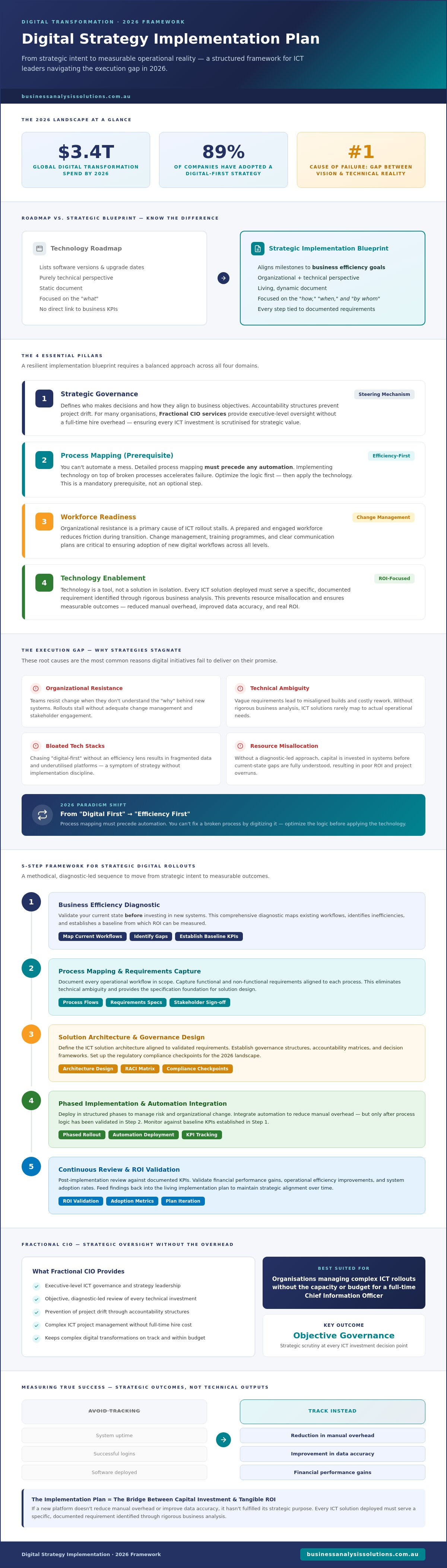
A digital strategy implementation plan is a living, operational document that translates high-level ambition into a sequence of technical and organizational actions. In 2026, the complexity of ICT ecosystems means a static document is no longer sufficient. Organizations now face a landscape where 89% of companies have adopted digital-first strategies, making the execution of these plans the primary differentiator. While a foundational understanding of What is a Digital Strategy focuses on the "what" and "why," the implementation plan focuses on the "how," "when," and "by whom."
There is a critical distinction between a technology roadmap and a strategic implementation blueprint. A roadmap often lists software versions and upgrade dates, which is a purely technical view. Conversely, a strategic implementation blueprint aligns these technical milestones with core business efficiency goals. It ensures that every ICT solution deployed serves a specific, documented requirement identified through rigorous business analysis. This prevents the common trap of resource misallocation during rollout phase.
The Evolution of Digital Execution
Modern implementation differs from traditional IT rollouts by prioritizing organizational harmony over mere software installation. In previous years, the focus was often on being "digital first," which frequently led to bloated tech stacks and fragmented data. Today, the focus has shifted toward "efficiency first." This transition requires deep business analysis to ensure that process mapping precedes any automation. You can't fix a broken process by simply digitizing it; you must optimize the logic before applying the technology. Success in 2026 is defined by how well a digital strategy implementation plan integrates with existing human workflows rather than disrupting them.
Strategic Outcomes vs. Technical Outputs
True success isn't measured by system uptime or successful logins. It's measured by financial performance and operational gains. By utilizing a digital transformation blueprint for business, leaders can establish clear KPIs that track real-world growth. If a new platform doesn't reduce manual overhead or improve data accuracy, it hasn't fulfilled its strategic purpose. The digital strategy implementation plan serves as the definitive bridge between capital investment and tangible ROI.
The 4 Essential Pillars of a Resilient Implementation Blueprint
A resilient digital strategy implementation plan requires a balanced approach across four core domains. You shouldn't view technology as a standalone solution; it's a tool that must be supported by leadership, optimized processes, and a prepared workforce. Research into a robust digital strategy implementation framework confirms that organizations failing to integrate these pillars often face technical debt and fragmented operations. By addressing each pillar methodically, you create a stable foundation for long-term growth.
Establishing Strategic Governance
Governance acts as the steering mechanism for your digital transformation. It defines who makes decisions and how those decisions align with your broader business objectives. For many organizations, fractional CIO services Australia provide the executive-level oversight needed to manage complex ICT project management without the overhead of a full-time hire. This leadership model ensures a diagnostic-led approach, where every technical investment is scrutinized for its strategic value. Accountability structures established during this phase prevent project drift and keep the implementation on schedule.
Process Mapping as an Implementation Prerequisite
You can't automate a mess. If you implement technology on top of broken or inefficient processes, you simply accelerate the rate of failure. This is why detailed process mapping is a mandatory prerequisite for any automation implementation. By documenting and analyzing your current workflows, you can identify "low-hanging fruit"—small, high-impact changes that provide immediate efficiency gains. This methodical step ensures that when you do deploy new ICT solutions, they're enhancing a logic that's already been optimized for performance. It's a pragmatic way to reduce risk and maximize the utility of your digital tools.
The third pillar, ICT infrastructure, focuses on system harmony and scalability. Your systems must be capable of seamless communication to prevent the data silos that hinder decision-making. Finally, change management addresses the human element of digital shifts. Resistance to new systems is a natural organizational response; however, it's one that can be managed through clear communication and structured training. If you're concerned about how these pillars fit together in your organization, a business efficiency diagnostic can help identify which areas require the most immediate attention.
Addressing the Execution Gap: Why Digital Strategies Stagnate
The most significant barrier to digital progress isn't a lack of vision; it's the fear of what happens on day one of a rollout. Leadership teams frequently cite the risk of operational disruption as their primary objection to moving forward. This concern is valid. When a digital strategy implementation plan lacks granular detail, it risks breaking critical workflows that the business relies on for daily revenue. Stagnation occurs when the perceived cost of change outweighs the visible benefits of the new system, leading to a state of "analysis paralysis" where legacy inefficiencies are tolerated simply because they're familiar.
A fundamental disconnect often exists between technical requirements and business objectives. Technical teams may prioritize system architecture and "feature-rich" capabilities, while business units require specific outcomes like reduced lead times or improved data accuracy. Off-the-shelf solutions frequently exacerbate this problem. Without a custom strategic blueprint, these tools force the business to adapt to the software, rather than the software supporting the business. This friction often leads to "shadow IT," where frustrated departments implement their own unauthorized tools to bypass rigid or ineffective official systems, creating security risks and data silos.
Mitigating Operational Disruption
Maintaining business continuity during a transition requires a phased approach rather than a "big bang" release. By breaking the rollout into manageable stages, you can validate each component before proceeding. A business efficiency diagnostic is essential here. It identifies which processes are most vulnerable to disruption, allowing you to build safeguards into your digital strategy implementation plan. Clear communication protocols are equally vital. Stakeholders must understand not just the timeline, but how their specific daily tasks will change and what support is available during the transition. This transparency builds the trust necessary to overcome organizational resistance.
The Cost of Misaligned ICT Solutions
Budget overruns are rarely the result of high software licensing costs. They're usually the result of poor requirements gathering. When the technical solution doesn't match the business need, the organization pays twice: once for the initial implementation and again for the inevitable remediation. Value-driven technology prioritizes the resolution of specific operational bottlenecks over impressive but unnecessary features. Meticulous business analysis ensures that every ICT solution serves a documented purpose, preventing the resource misallocation that plagues unguided rollouts. The Execution Gap is the space where strategy meets unmapped reality.
A Methodical 5-Step Framework for Strategic Digital Rollouts
Successful execution requires more than just a list of goals. It demands a repeatable, structured methodology that reduces risk and ensures every dollar spent contributes to operational excellence. While previous sections identified why strategies fail, this framework provides the specific sequence for a successful digital strategy implementation plan. By following these five steps, leadership can maintain control over the transformation process while ensuring technical outcomes remain grounded in business reality.
Step 1: Diagnostic Assessment. Conduct a thorough audit of current workflows to identify bottlenecks, data silos, and resource misallocations.
Step 2: Blueprint Development. Design the digital future state, ensuring all technical requirements align with long-term business objectives.
Step 3: Solution Selection. Use independent advisory to evaluate ICT tools based on functionality, scalability, and total cost of ownership.
Step 4: Managed Execution. Deploy the chosen solutions through structured integration protocols and professional oversight.
Step 5: Optimisation. Perform post-implementation reviews to refine processes and capture additional efficiency gains through iterative improvement.
From Diagnostic to Blueprint
The transition from vision to reality begins with a Business Efficiency Diagnostic. You can't chart a course to a digital future without an objective understanding of your current state. This diagnostic phase uncovers the hidden costs of legacy systems and identifies which processes are ready for automation. Once the data is gathered, it's distilled into a Digital Transformation Blueprint. This document serves as your organization's single source of truth. It prevents project drift by ensuring that every subsequent technical decision supports the overarching goals defined during the diagnostic phase. A well-constructed blueprint aligns your immediate ICT needs with your 2026 growth targets, providing a stable foundation for the entire rollout.
Execution and Iterative Growth
Once the blueprint is finalized, the focus shifts to managed execution. For mid-market organizations, this is where expert project management becomes the deciding factor between a smooth rollout and a costly delay. Professional oversight ensures that multiple workstreams remain synchronized and that technical teams remain accountable to business deadlines. During this phase, automation implementation plays a critical role in achieving scalable growth. By automating high-volume, low-value tasks, you free your workforce to focus on strategic initiatives. Finally, establishing a feedback loop ensures that your digital ecosystem isn't static. Continuous refinement allows you to adapt to new market conditions and regulatory changes, ensuring your investment remains relevant long after the initial rollout is complete.
For a tailored approach to your digital future, consult with our team at Business Analysis & Solutions to begin your diagnostic journey.
Leveraging Professional Advisory for Implementation Success
Internal teams often struggle with the dual burden of maintaining daily operations while attempting to manage complex transformations. This overextension frequently results in a digital strategy implementation plan that is either too ambitious to be practical or too conservative to drive real growth. Professional advisory provides the necessary distance to evaluate systems objectively. This ensures that the chosen path reflects the organization's actual needs rather than the preferences of a single department or the limitations of internal technical knowledge.
A professional approach to business analysis reduces the accumulation of technical debt. When systems are implemented in isolation, they often require expensive remediation later to ensure compatibility. Independent advisors prevent this by considering the entire organizational coordination from the start. They ensure that every ICT solution is logically sound and technically viable before a single line of code is written or a license is purchased. This meticulous planning saves both time and financial resources during the execution phase.
The Value of Independent ICT Consultancy
Independent ICT consultancy prevents the common pitfall of vendor lock-in. When organizations rely on software vendors for implementation advice, the resulting ecosystem often prioritizes the vendor's product suite over the business's requirements. By leveraging 20+ years of industry experience, independent consultants identify these traps early. They act as a bridge between technical teams and executive leadership, translating complex ICT requirements into clear strategic outcomes. This objectivity ensures that your technology stack remains flexible and scalable as your business evolves.
A Fractional CIO serves as the dedicated guardian of your implementation plan. This role provides the high level governance needed to maintain momentum and ensure that every new system integrates seamlessly with existing workflows. Unlike internal managers who may be swayed by organizational inertia, a Fractional CIO maintains a relentless focus on the strategic blueprint. They ensure that the project stays on track and remains aligned with the efficiency goals established during the initial diagnostic phase.
Securing Your Digital Future
Securing your digital future requires more than just modern software. It requires a state of business technology harmony where systems and strategy work in unison. A structured implementation plan future proofing your organization by building scalability into the architecture. This methodical approach ensures that your digital ecosystem can adapt to new regulations or shifting market conditions without requiring a complete overhaul. It transforms technology from a cost center into a primary driver of operational value.
It is time to move beyond strategic theory and embrace a result driven execution framework. To turn your vision into a measurable operational reality, Contact Business Analysis & Solutions to begin your implementation journey.
Transforming Strategic Intent into Operational Excellence
The transition from a conceptual vision to a functional digital environment requires more than just technical aptitude. It demands a rigorous alignment of organizational processes with strategic objectives. By prioritizing business analysis and establishing clear governance, you eliminate the ambiguity that often leads to resource misallocation. A robust digital strategy implementation plan ensures that your ICT investments are grounded in business logic rather than technical trends, allowing for predictable outcomes and sustained operational efficiency.
Navigating this complexity is simplified with the right expertise. With over 20 years of industry experience and national Australian service coverage, we provide the specialized guidance needed to de-risk your digital journey. Our expertise in Fractional CIO services and automation implementation ensures your systems remain harmonious and scalable. It's time to resolve your organizational challenges through a structured, methodical approach that prioritizes long-term value over short-term fixes.
Request your Digital Strategy Blueprint from Business Analysis & Solutions and begin your transition to a more efficient, result-driven future today.
Frequently Asked Questions
What is the difference between a digital strategy and an implementation plan?
A digital strategy defines your high-level objectives and the logic behind your transformation, while a digital strategy implementation plan provides the granular roadmap for execution. It's the difference between knowing your destination and having a turn-by-turn navigation system. The implementation plan details specific ICT solutions, timelines, and accountability structures required to turn strategic theory into operational reality.
How long does a typical digital strategy implementation plan take to execute?
Execution timelines vary based on organizational complexity, but most mid-market transformations take between six and eighteen months. This isn't a single event but a phased rollout designed to maintain business continuity. By breaking the implementation into manageable stages, leadership can validate each technical milestone before proceeding to the next, ensuring that progress remains aligned with the initial blueprint.
Why do most digital strategy implementations fail in Australian businesses?
Most failures result from the execution gap, where technical rollouts are disconnected from core business objectives. Many Australian organizations attempt to implement new technology without first performing rigorous process mapping or business analysis. This leads to resource misallocation and organizational resistance. Without a clear framework to bridge the gap between high-level vision and technical reality, ICT investments often fail to deliver measurable ROI.
Do I need a full-time CIO to manage my digital implementation?
A full-time CIO is often unnecessary for mid-market organizations. Fractional CIO services provide the executive-level governance and oversight required to manage a complex digital strategy implementation plan without the financial overhead of a permanent hire. This model allows you to access specialized expertise on a flexible basis, ensuring your implementation stays on track and remains objective throughout the transformation process.
How much does a digital transformation blueprint cost to develop?
The investment required for a digital transformation blueprint depends on the scope of your operations and the complexity of your existing ICT ecosystem. Rather than focusing on a flat fee, organizations should evaluate the cost relative to the potential for improved operational efficiency and reduced technical debt. A well-constructed blueprint prevents the far greater costs associated with failed implementations and misaligned technology choices.
Can automation be implemented without a formal digital strategy?
Automation can be implemented in isolation, but it often leads to automated inefficiency. Without a formal digital strategy, you risk digitizing broken processes rather than optimizing them. A strategic approach ensures that automation implementation serves a specific business requirement identified through analysis. This prevents the creation of new bottlenecks and ensures your tech stack remains scalable and harmonious.
What role does business analysis play in digital implementation?
Business analysis is the mandatory foundation of any successful digital implementation. It identifies the specific requirements that ICT solutions must fulfill to drive value. By analyzing current state workflows and identifying bottlenecks, business analysts ensure that the implementation plan remains grounded in operational logic. This process prevents the common mistake of selecting technology based on features rather than its ability to resolve actual business challenges.



Comments